David writes;

The Winter fishing at Vaux this year has been superb – see the January 28th Blog post here

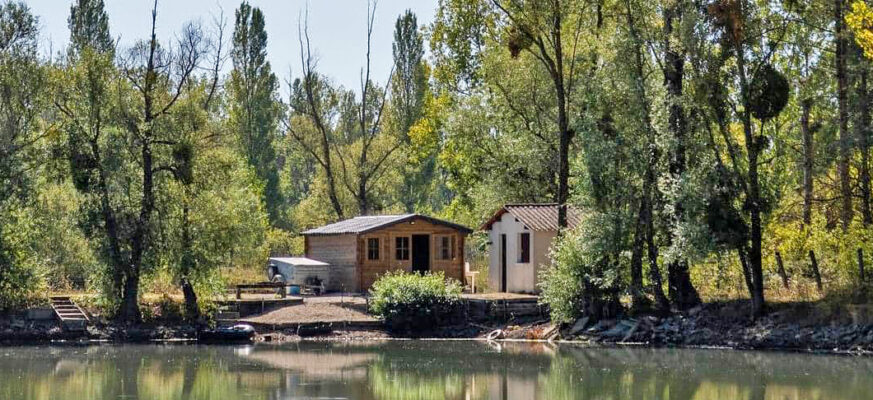
In this post from Chas, the owner of Vaux , he gives away one of his winter edges… his Ice Rig!

Chas's Ice Rig

From May 2002 when we bought Vaux until March 2004 when it was opened as a carp fishing venue, the mill storehouse was converted into a gîte, extensive works were carried out to the banks, fish stock was introduced ….. and we were at liberty to fish our lake. For the past six years, we have been lucky enough to fill the main season weeks with carp anglers and it is not until the season winds down that it becomes ours to fish again. That means Winter fishing! continue reading…

Tags: , ,

David writes;

Here at the Angling Lines office we get lots of potential lake owners come to us for advice as they consider the pro’s & con’s of fulfilling every carp anglers dream – buying their own carp lake.  We’re always happy to advise based on our 10 years experience in marketing carp venues… but we lack that real first hand experience of actually going through the process.  So I’ve asked our lake owners if they’ll share their experiences of what it’s really like to both buy & then run a French carp venue.  No doubt they’ll all have common themes but I’m sure they’ll also all have had different experiences as they’ve navigated their way to their own piece of paradise.  I’ll add them over the next few weeks.  Here’s the first from Martin & Shirley Barker at Oakview.

Oakview

Whether you are looking to buy, or whether you run a carp venue already, here’s some useful tips we’ve gleaned from our experience;

Get Officially Registered!

Lakes in France must be registered with the Department of Agriculture and fall into fishing categories (categorie piscicole). continue reading…

Tags: , ,

A very interesting series of posts on the Forum at the moment covering the Barbed Vs Barbless debate.

As with most things in life there’s 2 sides to every argument and whilst I’d always thought that the pro-barbed argument was more about it being to the anglers advantage (as opposed to the carps) I must admit to having my views challenged. Here’s a couple of extracts;

Pro – Barbed

I much prefer a barbed hook as I also think mouth damage is minimized when compared to a barbless hook. A barbed hook generally makes a small neat hole that easily and quickly heals whilst a barbless hook is more prone to slipping and slicing therefore making a larger wound. If you take you time removing the hook rather than ripping it out then a barbed hook shouldn’t cause much more damage than a barbless hook.

I do think that hooks are just part of the equation in causing mouth damage. When a hook pulls it doesn’t come neatly out of the hole it’s created in the carps mouth but rips and tears it way out. I also wonder how much mouth damage is done by people using super stiff rods that are so fashionable these days and not playing fish but simply winching them in.

*************************

Stiff rods and in-efficient rigs are the main cause of hook pulls/mouth damage. continue reading…

Tags:
Michael wrote;

I am going to Roseau to fish the large lake in March. I have never been fishing in France so I don’t know what to expect. Could someone give me some advice please? Also am driving there myself and have never driven in another country before. Thanks.

David replied;

Hi Michael, thanks for your question. I’ve asked Roy Fulton who controls the fishing at Roseau to give you some pointers but before he does can I suggest you take a look at our Forum. I’ve posted your question under the Roseau section here. There’s also a complete section dedicated to driving in France & you can find that here. Right over to Roy….

Hi Michael,

The best advice I can give for fishing Roseau is to keep things nice and simple, don’t over continue reading…

Tags: , ,

David writes;  I had this Email sent to me by a French lake owner today… I thought I’d pass it on so other lake owners could either benefit or comment;

I recently had a meeting with a recognised fishery expert and we had a very interesting conversation about the use of lime.

It is already widely known that lime kills undesirable water-borne creatures and I’ve been adding lime each winter to achieve this.   However, having fully discussed this with the vet, it is more specific that just spreading dry (granulated) lime over the surface of a lake.

I’ve been told that it’s necessary to make up a “lime milk”.   This is done by mixing the granulated lime 1 part to 3 parts water.   This makes a “lime milk” which should then be added to the lake (by means of some type of Heath Robinson system – pump etc) and spread throughout.   This turns the water a milky colour, which will disperse.  The timing is also important – this should be done in February (the guy said before March) but I’m assuming that the hatching of creatures is dependant on whether one has a warm or cold spring.

The difference between just adding the dry lime and the milk solution is that the dry lime simply drops to the bottom and only kills the larvae there, whereas the milk solution also kills the suspended larvae that are waiting to hatch. The dosage rate is 150kg of lime to 1 hectare.

I thought perhaps you may find this information useful.

(Definitely worth reading the comments below before you come to any conclusions on this one)

Tags: