Weāve come a long way since āMr Crabtree Goes Fishingā (or John Wilsonās āGo Fishingā, come to that). But have we traded cutting edge āangling innovationā for common sense skills?
Fact is, todayās Pot Noodle (ājust add waterā) carp anglers can walk into the most modestly equipped tackle shop and walk out with pretty much everything they need to catch fish – from ready-made rigs to high attract boilies; bait boats and fish finders to glugs, goos and myriad gewgaws besides.
There is however one very important piece of the piscatorial puzzle that money canāt buy; a piece so important that its absence ā even on the least challenging of carp ārunsā waters ā will cost you fish.
To the Korda Generation itās called watercraft. To old gits such as myself itās known as: the b***inā obvious.

To my mind, the traits and tropes that come naturally to anglers of a certain age ā tread gently; keep your silhouette off the skyline; donāt yell at your mates on the far bank ā seem to be lost on modern carpers.
As do the fundamentals of fish finding.
So often, Iāve stared down at the lake from my lonely garret (aka: caravan/office) watching, with undisguised awe, the six-stage set-up process favoured by so many day ticket anglers; to wit:
1. Choose a swim – preferably one thatās out of the wind, and close to the car park
2. Set up the bivvy, bed, sundry furniture (chair, storage system, table) and iPad
3. Cast a marker an achievable distance
4. Spomb a half-hundredweight of boilie in the general direction of said marker
5. Cast three rods, ensuring at least one is āthere or thereaboutsā
6. Reach for the bottle opener, corkscrew, rolling papers and/or Just Eat appā¦
No consideration for the topography of the lake bed. The prevailing conditions. Or the 30-odd carp that are busy head-and-shouldering at the far end of the pond.

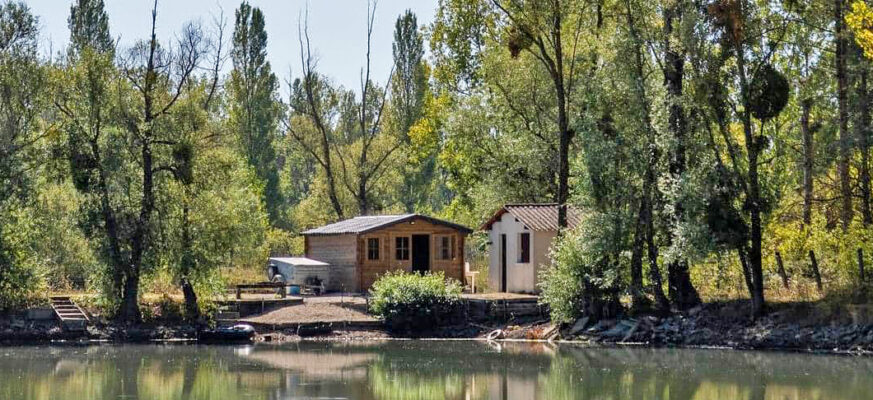
Laroussi is a venue with a wealth of information available on the website to help you choose the best plan of action for your French carping trip
Hey ho. Chances are, if theyāre in situ for a day or two, these camper-carpers may pick up a couple of fish by default.
And if theyāre happy, hey ho: no judgement.
But if they really want to catch fish ā consistently and in numbers ā a little more thought is required.
Watercraft, in other words.
So what exactly is watercraft? And where can it be downloaded?
Well, alas⦠it canāt. Watercraft has to be learned and (heaven forefend) worked at.
It means developing an affinity for the angling environment; understanding the weather, and how it influences carp behaviour – what they do, where they go; when and why.
Often referred to as āreading the waterā, it means getting to grips with the main features of the venue (both seen and unseen) – identifying the fishās patrol routes, and where they might be tempted to feed on any given day, taking into account the prevailing weather (in particular the wind), pressure (air and angler!) and other variables.
Watercraft Hack #1
Carp generally follow newish, warmer ā particularly, south-westerly ā winds; remaining āon the backā of colder north-easterlies. Given this, a good starting point is to install a compass app on your phone ā and head for the northeast corner of the new venue.
Pressure too is key.
Low air pressure (anything below 1000 mb) will usually bring with it cloud cover and wind, pushing the carp down in the water ā hopefully onto your baited area.
By contrast, high air pressure generally means clear skies – sunny days and chilly, starry nights ā with the carp more likely to remain in the upper layers.
So, a barometer should also form part of your armoury.
Watercraft Hack #2
Carp, especially in pressured waters, will seek the safety of the snags, where they can feed in confidence.
Margins are always worthy of investigation, providing natural āroadwaysā round the lake (not to mention a great source of food, in the form of anglersā discarded hookbaits). As are islands: natural āholding areasā for carp, which combine safe zones āreed beds, pads and overhanging trees ā with natural patrol routes, such as marginal shelves and bars.

These obvious above-the-water features are of course just the tip of the watercraft iceberg. Begging the question: what lies beneath? What should we be looking for when finally we reach for the marker ā or increasingly these days the Deeper?
How do we identify those āspots within areasā that are favoured by feeding fish?
Watercraft Hack #3
Gravel bars arenāt just used as patrol routes. The surrounding silt beds, to the front or back of the bar, can provide natural food larders. So, in open water ā with an otherwise uniform lakebed ā these areas are well worth targeting.
Indeed, the open water itself can be a feature on more pressured venues. If the centre of the lake is a long chuck ā out of range of all but the most of accomplished of distance-casters – carp may consider it a safe haven when angling pressure is at its most intense.
So getting a few extra yards on the cast ā fining down your mainline, upping your lead size, and adding a shock leader, so as to reach showing fish – can be a real edge.
Would that it were that simple. Alas, though you may see carp rolling en masse, it doesnāt necessarily follow that youāve discovered a feeding spot; rather you may just have found an area in which they feel comfortable at a given time; a staging point en route to their preferred feeding spots.
Key to locating those feeding spots is to watch and learn; vigilant to the many giveaway signs such as bubbling, flat spots and cloudy water. And of course the aforementioned āhead and shouldering which ā accepted wisdom has it ā is a sign of feeding carp clearing their gills.
Inevitably, this is a whole lot easier on more intimate carp ponds. So where better to hone your watercraft than on smaller venues; developing the skills and confidence to move on to bigger reseās and gravel pits, where you cannot see the carp or lakebed so easily; and may thus be forced to depend on instinct borne of experience.
And experience is what itās all about. For while it is true to say that a tiny minority of carp anglers, the likes of the much-missed Rod Hutchinson, are true Masters of the Black Art – intuitively aware of where the carp will be, and when – the rest of us can nonetheless take a leaf out of their book: simply by taking the time to look, listen⦠and learn.
Steve Calder

Comments