
Every year, hundreds of British anglers head across the Channel in search of those iconic French monster carp, with carp fishing in France becoming a bucket list trip for many UK anglers. With so many lakes to choose from, it’s no surprise that more and more UK anglers are making the trip, hoping to beat their PB’s on France’s renowned waters.
A week-long session is the norm for most visiting anglers, but for many it’s a much longer stint than they’re used to back home. If you’re planning your first French carp adventure, the tips below should help you feel a little more prepared before you set off.
1. Make a list
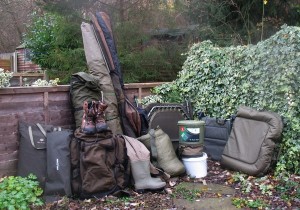
The first thing you should do is make a list. It might feel a bit over the top, but honestly, make that list.
It can be the difference between an amazing week and a truly awful one. I know anglers who’ve turned up to their chosen lake only to realise they’d forgotten reels, pods, food, even alarms. Starting your trip in a bad mood because half your kit is still sitting in the garage is not the ideal way to kick off a week’s fishing.
A proper checklist might look long at first glance, but on a self‑drive trip these items are essential. Working through the list as you pack is the easiest way to make sure nothing important gets left behind.
2. Tackle
I tend to fish smaller lakes in France, so your own tackle needs might differ slightly. As with any venue, just like back home use gear that suits the water you’re fishing. Bigger lakes can demand stronger, more robust tackle, so plan accordingly.
Rods – Give yourself every chance of landing a big fish; that’s why you’re in France, after all. Most anglers opt for rods of 2.75lb test curve or stronger, and it’s a sensible choice when you’re targeting large carp. Ultimately, it’s your call, but don’t under‑gun yourself.
Reels – If the stars align and you get into multiple big fish during the week, you’ll be grateful for strong, reliable reels. You don’t want to hand-line a whacker in because your reels break.
Alarms – Check your alarms before you leave, and it’s worth putting fresh batteries in them for peace of mind. Knowing they’ll last the whole trip is one less thing to worry about.
End tackle – Take as much end tackle as you reasonably can. You may have trouble finding a tackle shop, and if you do, they may not have the items you require. Things such as leads, PVA, hooks, mainline and hooklink materials are hard to come by. You don’t want to find that miracle method that catches stacks of fish and then run out of the main components!
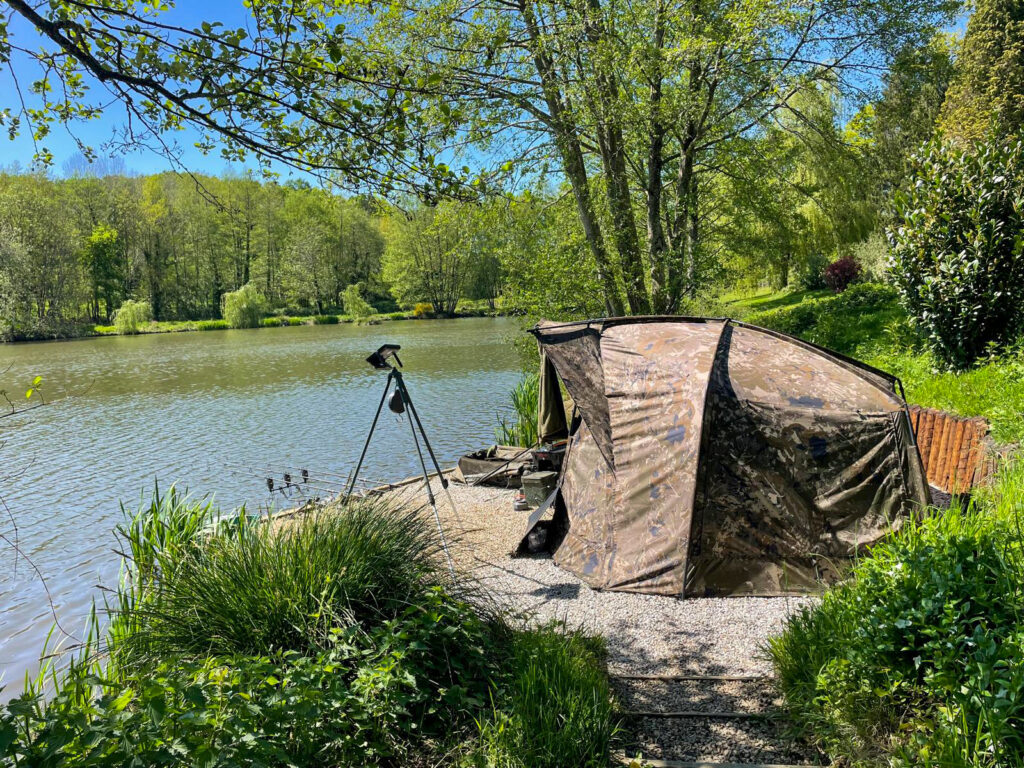
Bivvies – Back in the UK, I usually fish 24‑hour sessions with nothing more than a brolly and storm sides. After trying that setup for a full week in France, I quickly realised I needed more space for all the extra kit. Switching to a two‑man bivvy made the trip far more comfortable. Since I only use it a couple of times a year, it should last quite a long time (fingers crossed), so I should get my money’s worth out of it.
And the rest – Bring whatever you need to make your stay as comfortable as possible. A week can feel like a long time on the bank, and the more relaxed you are, the better you’ll fish. One item you’ll be glad you packed is mosquito repellent. French mozzies seem to be twice the size of ours, and they bite like they mean it. There are a few companies who supply devices that repel these little monsters… you have been warned!
3. Bait
This is the biggest change to French carp fishing in recent years.
You can no longer just load the car with boilies like in the old days. Since Brexit, bait containing animal products cannot legally be taken into France, and that includes most boilies. Particles are treated differently, but only very small quantities are allowed, and anything above roughly 2kg per person risks being confiscated at the port. In simple terms, assume you cannot take your bait from the UK.
(For a full breakdown, see our detailed blog on the Brexit & bait).
So how do anglers deal with it now?
Option 1 – Pre‑Order Bait at the Lake (Most Popular)
Nearly all French carp lakes now supply bait, and many actually prefer anglers to use it. You simply order before travelling and it will be ready for you on arrival. In many cases the fish are fed on that exact bait throughout the season, meaning the carp are already confident on it, recognise it as food, and are used to seeing it.
Option 2 – Order Bait for Delivery in France
If you’re loyal to a particular brand, that’s still possible. Many companies now ship directly to French fisheries or to local collection points. Some specialise in supplying UK anglers and will deliver to the lake if arranged in advance. But, check that your lake can accommodate this in advance – some lakes do not have anyone living on site.
Option 3 – Buy Bait on the Way
Plenty of anglers now stop en route from the port to stock up before reaching the venue. This works well if you prefer to see the bait before buying or want to pick up extra particles, pellets or additives.
Before You Travel
Always check the venue rules. Some lakes now require on‑site bait only, while others restrict certain particles to protect water quality. Look at recent feedback, find out what’s been working, but also pay attention to what’s most popular. Sometimes using something a little different from everyone else can be the edge you need.
4. Essentials
Clothing – The weather in France can be just as unpredictable as back home, so pack plenty of spare clothing. Downpours can appear out of nowhere, and you never know – you might end up wading in for that all‑important trophy shot because the fish is simply too big to lift out of the water (we can all dream). Temperatures can swing dramatically too, so be prepared for everything from chilly mornings to scorching afternoons.
Washing kit – A week is a long time without a wash, and you definitely don’t want to be turned away by British customs on the way home for being a health hazard. Pack a proper wash kit and a couple of towels. You’ll feel better, sleep better and fish better when you’re not living in your own stink.
Cooking equipment – Take whatever you normally use in the UK, but remember you’re away for a full week, so you may need extra cutlery and utensils. Check whether the venue has somewhere to wash up; if not, bring a bowl and some washing‑up gear. I’ve had food poisoning in France before, almost certainly from poorly cleaned pots and pans, and trust me… it was neither a pretty sight nor a pleasant smell. Good hygiene on the bank is worth the effort. Equally, rodents are often where anglers are because of the bait used. Remember to wash anything you’ve left outside – Weil’s disease sounds dramatic, but anglers are often more at risk than others.
5. Food
Since Brexit, there are restrictions on what food you can take into France, especially anything containing meat or dairy, so I tend to buy all my food once I’m over there. To be honest, after packing all the tackle there’s barely room left in the car for a bar of chocolate anyway, and French supermarkets are easy to find, well stocked, and often cheaper than the UK.
When it comes to what to eat, I still make sure I’ve got the essentials for “survival” while fishing – wine, beer, crisps and, naturally, more wine. But joking aside, a well‑fed angler is a happy angler, and happy anglers fish better. Don’t rely on snacks alone; try to have at least one proper meal each day. A bit of decent food goes a long way when you’re on the bank for a full week.
Want meals cooked for you?
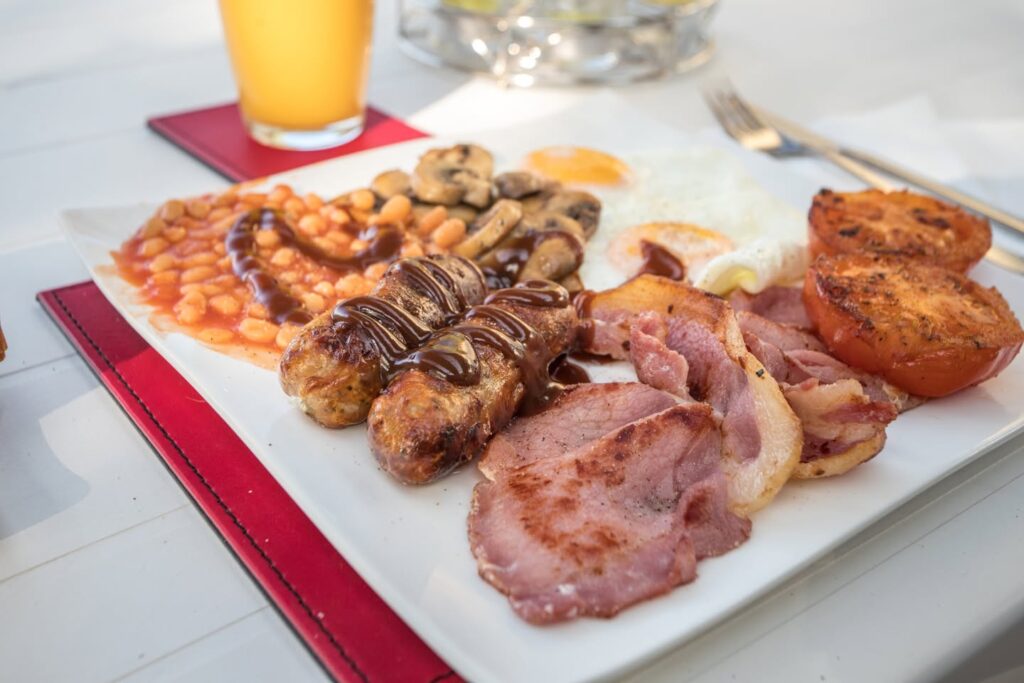
Another option is to go for French carp lakes that offer food packages on site. That means you get home-cooked breakfasts and dinners each day – many anglers opt for this and never look back! It definitely puts the ‘holiday’ in your French carp fishing holiday. We have over 10 lakes we’d recommend that offer this service. Find them all here: French Carp Lakes that offer Food Packages.
6. Travelling Requirements
→ Drive on the right
If it’s your first time driving abroad, remembering to stay on the right‑hand side can feel daunting at first, but you settle into it quickly.
→ Headlight beam deflectors (compulsory)
UK headlights dazzle oncoming traffic when driving on the right. Stick‑on converters from any car accessory shop will keep you legal.
→ Warning triangle (compulsory)
You must carry at least one in the car for use in a breakdown.
→ High‑visibility vest (compulsory)
Must be accessible inside the car (not in the boot). You need to be able to put it on before stepping out onto the road.
→ UK identifier (compulsory)
The old GB sticker is no longer valid. You now need a UK sticker unless your number plate already includes the UK identifier.
→ V5C logbook (compulsory)
You must carry your vehicle’s registration document (or a copy). French police can request it during checks.
→ Valid UK driving licence (compulsory)
A standard photocard licence is fine.
→ Car insurance
Check your policy before travelling. Most insurers still provide European cover, but some only include third‑party protection unless you upgrade. You may need to pay a small fee to extend your cover.
→ Breakdown cover
Strongly recommended. Without it, recovery and repairs in France can be extremely expensive. If you travel to Europe more than once a year, annual cover is usually the best value.
→ Travel insurance
Essential for medical emergencies, cancellations, and lost items.
Also take your GHIC (UK Global Health Insurance Card), which replaces the old EHIC/E111. It gives access to state healthcare at a reduced cost, but it’s not a substitute for full travel insurance.
→ Crit’Air clean‑air sticker
Some French cities have low‑emission zones. If your route takes you near one, you may need a Crit’Air sticker. It’s inexpensive but must be ordered in advance.
7. Extras
Lastly, here are a couple of items you’ve almost certainly thought of, but they’re worth a quick reminder. First up is your camera. Make sure you pack it, along with spare batteries or a power bank, because there’s nothing worse than landing a PB and realising you’ve got no way to record the moment. I’ve done it myself, and putting a PB koi and mirror back without a single photo still haunts me. Some of the smaller French villages only have tiny general stores with limited battery options, so take what you need before you travel.
A small first aid kit is also essential. It doesn’t need to be as well stocked as a doctor’s bag, but it should include plasters, bandages, antiseptic cream, painkillers and, in my case, a reliable hangover cure. A few basics can make a big difference over the course of a week, especially when you’re miles from the nearest pharmacy.
8. Final Thoughts
I hope this guide has helped, even if only a little. A trip to France might feel like it takes a lot of planning, but trust me, it’s worth every minute. When everything runs smoothly and you find yourself slipping the net under a carp the size of a small dog, you’ll understand why so many anglers go back year after year.
Take the time to organise things properly, enjoy the build‑up, and you’ll give yourself the best possible chance of making memories you’ll want to repeat again and again.
Ready to find your next lake? Search for your perfect carp fishing trip here → 50+ Tried & Tested Carp Fishing in France Lakes.
Tight lines!
Chris Porter

I would have liked to have seen mention of carp care in there as Robert Connolly mentions on facebook.
Antiseptic, and wound seals should be one of the first bits in anyone’s kit really and a check with the fishery or holiday provider as to whether mats and slings are provided or not. A lot of tails were broken in the early days of anglers travelling overseas with landing nets not large enough for dealing with very big carp.
If large catfish are present then a gardening glove may be your easiest way of landing one rather than try and fit them in your landing net.
Great suggestions there, last time I went to Mas Bas my mate decided to change his gear with some from dragon carp, it was a bad idea, within a few days his reels gave up, the rod pod fell apart and his bite alarms didn’t work, luckily I had spare gear to lend him, so I would say if you can spend a bit extra to get some decent, reliable gear then you should do so, you never know if your gear will give up and you might not have a friend there to help you out.
I agree that buying food in France is by far the best way of doing it, I found that even the supermarkets own brands in France can be a lot nicer than some of the premium brands in the UK and a lot cheaper. Its also worth checking out local markets, not only do they have cheap fresh fruit and veg but you will also find very cheap locally produced wine and cheese.
I would always recommend taking as much terminal tackle as you can, tackle shops are few and far between in France and when you do find one they are often aimed more towards pike fishing than Carp / Course. Finally as I recall, its a legal requirement that when your driving in France everyone in the car needs to have their own hi-vis jacket and have it close enough to get without leaving the car, also if you have a sat nav, its illegal to have speed camera locations loaded that warn you when you’re approaching them.
Hi, just would like to say how thrilled I am to be going on my first ever BIG fish to France this May. The information provided by Chris and others on here has been very valuable and most helpful. However, I would like to know from all the listed flavours of boillies there are out there, which ones to use at Margot? In my limited knowledge I understand that different venues fish differently in bait and do not want to pay out £90 odd on a bait that the fish don’t like! Get me? Anyway, soooo looking forward to the time over there.
Hi Trisha,
Here is a similar question I answered about Margot before on my Blog…
http://www.questbaits.com/blog/which-bait-do-you-suggest-for-margot/
I have suggested the mixed baiting approach to a few customers since and each one has done well doing that. It is very different to what the carp are used to coming across.
I believe you can buy mixed particle there to save weight and space whilst travelling.
Hope this gives you something to think about. Any further questions please feel free.
Best wishes
Shaun
Hi Trisha
I was asked a similar question only days ago via an email. My reply has been posted as a Q & A on the Margot page.
http://www.anglinglines.com/docs/venuearticlesdetails.php?venue=Margot&article=234
I personally would take a bait that you already have full confidence in and obviously that is in your price range.
Paul